29 December 2015

Mystified

Yesterday after a  busy morning and early afternoon (exercise, cooking) I finally sat down at my Windows computer and the Internet didn't work. I use my laptop at a docking station with a wired connection (to a Power over Ethernet adapter) so I tried to switch to wi-fi.  But my laptop seems to have forgotten it ever had a wi-fi connection. There are no wi-fi connections listed, so no adapter to enable (in the event it was inadvertently disabled).

That's one mystery.

The next is why the wired connection couldn't get my laptop to the Internet. Tracing back to my router, the router was connected. It provided a solid wi-fi connection for my wireless devices (phone, tablet) and the wired connection for our iMac (also wired to a Power over Ethernet adapter) was working, though slow (which is normal). I could surf the Web just fine from the iMac.

So I thought--maybe it's just a blip. I'll restart everything and see what happens. Our media/tech center (cable modem, TV, AV equipment, router, NAS drives, etc.) are located in our guest room, mostly powered through a heavy-duty surge suppressor.  So I flipped that off for a minute and then turned it on again. Waited.

No help for the Windows computer connection. Restarted again, unhooked and rehooked cables. We have a lot of equipment and not enough ports on the router, so we use an Ethernet switch to connect the additional devices. I moved cables around, checked whether different devices were affected.

During the course of my efforts, wi-fi was utterly lost and later regained. But Sonos (our wireless sound system that plays music throughout the apartment) was gone. Later it came back, but only one or two units (we have speakers in every room). It could play stuff in our local music library but nothing accessed from the Internet. Later it couldn't find the music library but played stuff from the Internet just fine. Tivo wasn't working. Our Roku worked on wi-fi but seemed not to recognize any connection when wired. And the Apple TV worked fine when wired. (Our Apple TV is an older model without wireless capability.)  I checked to see if my laptop worked with a wired connection direct to the router.  It did.

By the time Victor came home from work I was really beside myself. I had just restarted all the equipment, and the phone stopped working (we have digital phone service through our cable provider).  I figured I'd broken EVERYTHING.  Victor said, why don't you shut down the power and restart?

I had done that, but now I did it again.  And the phone worked!  But neither Sonos nor Roku were functioning. I stopped struggling once I got Roku working on wi-fi, and Sonos working enough to play the sound from the TV.  We made dinner and later settled down to stream our evening's entertainment.

This morning, Sonos was gone.  So, back to the drawing board.  I thought maybe the Ethernet switch was bad, so I tested that by substituting a different switch used elsewhere in the apartment. No effect on Sonos (the critical path at this point). Anyhow, the problem with the bad switch hypothesis was that Sonos wasn't working even when directly connected  to the router. So I started checking cables, one after another, to see if there were cables that worked and cables that did not work. Switched one cable.  I can't even remember why I thought that was a good idea. No immediate effect, but after restarting everything, and moving cables from one port to another in the substitute switch, Sonos was back.  Totally back! I couldn't believe my eyes! I switched everything back to the original switch. Still working!  Checked NAS drive connections.

Not working.

Moved cables around.

Working.

Then came to sit at my computer and see if the wired connection would work.  YES! (I'm using it now.)

Still no sign that my laptop is wi-fi-capable.  How does that happen? It could be unrelated to recent events; I rarely undock my laptop, so I can't recall the last time I used its wireless adapter...

The fact is that even though most issues are resolved I remain completely mystified as to what the problem(s) was (were) and what solved it (them).  My best guess is weather (it was an awful, windy, sleety day yesterday) but it's not a very satisfactory one. 

30 November 2015

The Purple Carrot Update and Other Healthy Food Delivery Options

We changed our minds quicker than I expected about The Purple Carrot, and are anticipating another delivery this Wednesday. A couple of immediate spurs to this this decision: last week due to foul weather I didn’t make it to the grocery store on the day I’d planned, and then the meal I’d planned to make required ethnic ingredients that weren’t available in my neighborhood. So my good intentions basically collapsed due to poor planning.

Instead, we ordered from Sprig, which a friend had tipped me off about: it’s an organic meal delivery service. On the upside, the meals are priced reasonably, arrive relatively quickly, and are made of wholesome organic ingredients (which—along with calorie counts—are clearly communicated). On the downside, the flavors (on the two occasions on which we ordered) are underwhelming.

My new interest in grocery and/or meal delivery pointed me to another service, Lighter, which serves Chicago.  Like The Purple Carrot, Lighter delivers the ingredients and recipes of wholesome meals; however, ingredients are sourced locally and delivered in person rather than by FedEx (you schedule your delivery so you can receive it).  Other big differences: you can choose a plan that includes meat or only vegetables and meal plans start at nine meals a week and go up from there—but meals may include breakfast, lunch, and/or dinner—you choose how many of each (The Purple Carrot offers a standard meal size/type).  Further, Lighter has a more custom bent: the idea is that you choose your goals, indicate what foods you can’t/won’t eat, and their nutritionists design a meal plan.

I like the idea of a more complete, customized meal plan, and would prefer that my ingredients aren’t sent from across the country, but our schedule right now doesn’t permit us to try Lighter.  Maybe next year.

In the meantime, we look forward to our next delivery from The Purple Carrot. Since we are traveling a few days each week until mid-December, it’s actually going to be a great convenience to have the ingredients of three healthy vegan meals delivered to our home—during a very hectic period we won’t have to plan anything. We are also excited about the opportunity to learn more relatively quick techniques (preparation of the meals takes 45 minutes or less). In the first week of using The Purple Carrot I learned to make tahini sauce, massage kale, and make the quickest black bean burger ever, all of which I found pretty thrilling. Also, every (Mark Bittman-written) recipe we have tried from The Purple Carrot has turned out delicious, which is hugely persuasive.

17 November 2015

Checking out The Purple Carrot

Last year around this time, I read Mark Bittman’s VB6: Eat Vegan Before 6:00 to Lose Weight and Restore Your Health . . . for Good after hearing him talk about it at last year’s Chicago Humanities Festival. Bittman was promoting the idea of eating vegan, whole foods for breakfast and lunch—and relaxing restrictions at dinner. He explained that he invented the system to deal with his own health issues (creeping weight gain, newly borderline cholesterol, blood pressure, and pre-diabetes conditions) and found it to be eminently doable, effective, and also delicious.

I found his talk inspiring, and his book equally so. The book includes great advice, like prepping vegetables when you bring them home from the grocery store, so it’s less of a chore to cook on a weeknight. For some months I was cooking a lot more at home, but frequent travel would get me out of the habit.

Recently Bittman left the New York Times to join The Purple Carrot, a vegan food delivery service. It’s a business that suits his ideals, encouraging families to eat vegan at least a couple of times a week. He makes the recipes, and the delivery service makes it easy by providing the ingredients you need to cook those recipes, already portioned out.

So I tried it. The recipes are great, but I was underwhelmed by the delivery service. Last Wednesday I got a big heavy box, with ingredients for three recipes. I found all the packaging embarrassing. They make a big deal about how you can recycle the cold packs (slit them open, dump the gel in the trash, and then put the plastic in the recycle), but doing that weekly just seemed an awful waste to me. And I didn’t see the need to get stuff delivered that I normally keep in my pantry (cans of black beans, or cumin). So while I had success with the recipes (even with one for which the packers omitted one of the requisite vegetables), I cancelled.  I thought I’d work with the recipes (which are available to anybody) and do my own shopping.

Today I’m questioning that decision. I’d planned to go to the grocery store, but it’s pouring. And tomorrow I can’t shop, either.

Hmm.

Maybe in the new year I’ll rejoin.

13 November 2015

The Thompson Center

There’s an interesting post about the Thompson Center on the Chicago Architecture Foundation website. Victor and I hated this building for a long time. It seems out of scale and out of keeping with its surroundings, round for the sake of being round; it is accompanied by an extravagantly ugly piece of public art; and the interior, with its enormous atrium showing the galleries of floors above reminds me of a really depressing Hyatt Regency Hotel. 

The building was designed by prominent architect Helmut Jahn, and our opinion of him was quite low for a long time in spite of the way he is often highlighted on the CAF boat tours we take approximately annually with out-of-town guests.

Two things changed our point of view about this building (somewhat). First, some years ago, with a friend visiting from out of town, we had a chance to visit the tippy-top of the Hard Rock Hotel, which is located in the former Carbide and Carbon Building.  They were renovating at that time, and the elevator took all the way up even though it was under construction. We had a chance to look out the windows, from which the views down on the city were just fabulous. And when I saw the Thompson Center from that vantage, I said, “Oh, I know why they chose that design. In a maquette it would have looked awesome!”

Second, we visted Berlin a couple of years later and encountered the thrilling Sony Center, also a Helmut Jahn project. It is hard to find good photos because the complex is so enormous, but when we saw it Victor and I both thought, This is what the Thompson Center was practice for.

Our attitude toward the building thus transformed. Perspective is all.

11 November 2015

Substitution in Thinking about Activists

There is something so very wrong when college students are subject to racial epithets and ugly vandalism and nothing is done, as has happened at Missouri State University. Now, because the football team decided to strike, there are at least some administrative changes in the offing, but there is still not much clarity around how the racist behavior at the root of current events will be addressed. 

And when the protesting students make (perhaps) a misjudgment (the refusal to tolerate a media photographer at their tent city on campus), the world rushes to condemn them.

As if pushing one reporter away outweighs addressing any harm the students have suffered and will suffer due to entrenched racism in the university community.

I suppose it is because racism makes us so uncomfortable. We much prefer to believe it doesn’t exist, or if it does, then it isn’t our responsibility to fix. 

The other night I was glued to Twitter, reading a conversation between Roxane Gay (who recently spoke at the Humanities Festival here in Chicago) her friend, sociologist Dr. Tressie Cottom, and David Simon, the former journalist who created the great television series The Wire and Treme. David Simon was arguing for absolute freedom of the press, criticizing the protestors for barring access to photographer Tim Tai. Gay and Cottom were making a more nuanced argument, accounting for the protesters’ wariness of media and their desire to foster a safe space.

What stunned me most was how much Twitter energy was going into arguing over this incident—one viral video. This was more worth discussing than how we fix the real problems that those protesters are facing? Tim Tai himself tweeted, “Just want to reiterate that while I think we need to talk about the 1st Am issues from today, the larger story is not about that.

Yet The Twitter conversation went on! I was deeply disappointed in David Simon, although this discussion has been proposed as an example of a useful debate on Twitter.

Can we have multiple conversations (e.g., about racism and about the importance of the first amendment)? It seems like we ought to be able to. But when one conversation is difficult, we tend to supplant the difficult conversation with the easier one. And if the easier one involves switching blame to the victims we might be complicit in harming, so much the better.

We not only get to avoid the difficult conversation, but we get to weasel out of our responsibility to fix the root problem. It’s like focusing on a rape victim’s tacky fashion sense, or—even more typically—focusing on the shoplifting activity of an unarmed teen killed by police.

I don’t know what stops this. Per Daniel Kahneman (Thinking, Fast and Slow), answering an easier question when we’re asked a hard one is something we just do. Recognizing that we do it is one step forward, but only the first.

P.S. Good article by Roxane Gay on student activism here.

06 November 2015

Out of Love with Twyla

Victor and I went to see the Twyla Tharp 50th Anniversary Tour performance at the Auditorium Theatre last night and were disappointed.  It wasn’t the first time. We were underwhelmed by Tharp’s Movin’ Out on Broadway (in 2005) and by a subsequent performance in Chicago.

I was introduced to Twyla Tharp by a couple of 1980s movies. I was struck by the choreography in Milos Forman’s Hair, which remains one of my favorite movies of that era, and in White Nights, which I went to see in the theater repeatedly (it remains a guilty pleasure to see again on video).  The idea of ballet had always bored me, but now I felt that there was something to it. I was utterly thrilled by the mix of movement and emotion.  Perhaps it was Mikhail Baryshnikov and Gregory Hines as much as Twyla Tharp who enraptured me. Regardless, she went to the top of my mental list of who to go see live when I had means and opportunity.

That took more than a decade.  We were living in Columbus, Ohio. The Wexner Center for the Arts brought Twyla Tharp in 2002. She had a long association with the Wexner and appeared in person after the performance to crankily answer the questions of dance students in the audience.  While I don’t remember the performance specifically, I remember feeling much the same thrill—and feeling very fortunate.

I can’t say the same of Movin’ Out, which I’d looked forward to intensely.  After all, I’d grown up adoring Billy Joel’s music. Adding my favorite choreographer to the mix could only be a bonus.

That was a miscalculation. The choreography was so literal and uninspired, I felt embarrassed. I remember saying it was like watching the Solid Gold dancers. Almost every choreographic move was sexualized, as if mimicking sexual intimacy was the only interesting choice. (In fact, when you make that choice every time, it becomes dull.)

While the current performance isn’t all about sex, it is unfortunately much about sameness. After a brief First Fanfare, the new Preludes and Fugues (the music is from Bach’s Well-Tempered Clavier) contains a number of lovely and surprising moments but they are repeated without development over 45 minutes, which diminishes their impact. The second act starts with a stunning Second Fanfare—brief, like the first. The striking choreography of this piece is enhanced by silhouette effects on and behind the curtain.  The long Yowzie has a vibrant early jazz soundtrack, but in spite of some delightful moments, the repetition without development eliminates any feeling of excitement you might have had at first.

This is a busy time of year for us, and I think our disappointment was sharpened by the feeling that we could have had a night off!  Our powerfully positive early impressions of Twyla Tharp have been pretty definitively wiped out. 

We will no longer be going out of our way to see Twyla.

05 November 2015

The 606

I rode my bike over to the new 606 trail yesterday with a friend. It’s a hugely popular new elevated park, on the site of a disused rail line. It’s similar in concept to New York City’s Highline, but a different animal. The 606 is twice as long (just over three miles), allows bicyclists, and is located in a part of the city that’s a lot less dense. That means most views from the 606, while pleasant, lack the spectacular punch of views from the Highline. You see a lot of different residential real estate (some of which looks brand new—as if built or rehabbed to leverage a potential gentrification boom around the 606’s popularity) so it feels more neighborhood-y, which is appropriate to the kind of city Chicago is.

On a beautiful Wednesday afternoon, the trail was heavily used by strollers, loungers, bicyclists, joggers, speed walkers, and school kids. Part of the vision for the 606 is to connect to different parks on Chicago’s West Side, and it looked likely that the school group was using it for that purpose. The new park works a more beautiful way to commute between Bucktown and the far West side and as a beautiful (and perhaps delicious) way to explore a different part of town, if you’re not from there. 

During both my visits to the 606, I ate with companions at 90 Miles Cuban CafĂ©, which is just north of the trail on Armitage Avenue at Rockwell in Logan Square. So it’s a great resource for neighborhood residents and also offers potential for turning these West Side neighborhoods into destinations.

The plantings along the trail are still in process, and will doubtless take some years to really come into their own, but even now the greenery creates a tranquil environment, and the several seating areas and short parallel trails (some with soft walking surfaces, surrounded by more heavily planted areas) make the trail even more parklike. As parks continue to be developed near its access points, the 606 will be an even more attractive greenspace.

30 October 2015

Eric Oliver at the Chicago Humanities Festival

Last night at the Chicago Humanities Festival we saw Eric Oliver, a professor of Political Science at the University of Chicago, who gave a talk about American magical thinking. He sets up a dichotomy between what he calls “tangible” and “symbolic” thinking, which is best exemplified by a survey he describes, in which respondents are asked whether they would rather stab a photo of their family four times or stick their hand in a jar of slimy worms. Or spend the night in a beautiful house in which a family had been murdered versus spend the night in a seedy bus station. Would you rather wear pajamas that belonged to Charles Manson or pick up a nickel from the street and put it in your mouth?  

The gist of these questions is probably clear. The first items in these pairs are symbolically (and negatively) resonant but don’t cause actual harm, while the second items carry real risk. Oliver found that people who consistently choose to avoid the symbolic negative resonance (and bear the real risk) tend to have other magical beliefs, such as beliefs in angels, conspiracy theories, the idea that we are living in biblical end-times, or the healing power of crystals.

Oliver connects his work to that of Daniel Kahneman, who, in his Thinking, Fast and Slow describes how we frequently use cognitive shortcuts that lead to wrong results. For example, if a ball and bat together cost $1.10, and the bat costs $1.00 more than the ball, how much is the ball? 

Did you come up with 10 cents?  Think again. 

Similarly, if the asking price of a house is $400,000 we tend to believe its value is something around that, but the asking price is not relevant to its value. Determining value from scratch, though, is very difficult question. Starting with the asking price is a convenient shortcut, even if we are effectively answering a different (easier) question.

Oliver traces the surprising post-enlightenment persistence of magical beliefs to uncertainty—which he sees as always at the root of magical thinking. For example, a tribal fishing culture he discussed had few magical beliefs around river fishing, which they understood very well; however, there was a whole set of magical beliefs arranged around deep-sea fishing, which was fraught with dangers and offered uncertain rewards.

Magical thinking, then, is a kind of cognitive shortcut we use when we are uncertain or uncomfortable. While this explains particular beliefs—for example, uncertainty and discomfort about the finality of death leads some to believe in reincarnation—it’s not as clear how such beliefs are effectively tackled. Indeed, Oliver was asked that question and didn’t have a good answer.

Because we have a political discourse that is plagued by magical thinking and the denial of science, this is very troubling.


27 October 2015

Fruit

When I was in grad school, I remember a friend saying, “I wish we could just live on fruit.” Many creatures do, of course, live on mainly fruit. I’m thinking of certain berry-eating birds and tropical monkeys; no doubt there are others. But humans aren’t made that way.  We need our veggies, our protein and fat. Still, many of us probably don’t consume enough fruit, although we’re lucky, in this stage of human history, to have access to so much of it so much of the time.

Right now, for instance, there are two apples, an orange, a plantain, a mango, a lemon, and three limes on our kitchen counter. In the refrigerator, there is a bunch of grapes. Only the apples are seasonal now in the Midwest. None of the other fruits ever grow here. We’re already nostalgic for summer, when we feasted on peaches, nectarines, and plums that came from nearby states.  Even when they came from the West Coast, they tasted good.

(I’ve never had winter stone fruit—what my mom called “fresh fruit”—that tasted good.)

When I go back to the grocery store, I expect to pick up more citrus, maybe some berries, bananas, pears, more apples.  The apples and pears might be from around here; the rest will come from California, Mexico, or even further afield.

A lot is being written about our unsustainable food system. It’s kind of crazy that I can be eating mangos from Brazil and grapefruits from Texas, not to mention bananas from equatorial countries and citrus from wherever it’s warm right now.  It’s possible that in some years or decades, we’ll be back to a situation where oranges are a special winter treat (which I almost remember from my childhood—at least, I remember we had a relative in Florida who would annually send us a box of oranges and it was a big deal) and we almost never see papaya or pomegranates in Chicago.

But we are so used to having whatever we want, whenever we want it. Produce has gotten a lot more expensive in the past 10 years, but when you consider that you can buy a mango for a dollar—less than you spend for an apple from Michigan—you realize how ridiculously cheap food really is. One solution probably involves pricing food more realistically.  It doesn’t make sense that a pound of bananas from Honduras costs much less than a pound of pears from a local farm. 

Does it?

I guess issues of scale come into it. This is something discussed in the fine carbon footprint primer How Bad Are Bananas? (The answer to the title question is “not so bad, actually,” because they are transported in ships, which are pretty efficient.) Locally grown produce is transported in more and smaller vehicles, which may not be as energy efficient as a large truck—certainly not as efficient as a giant container ship.

So it’s complicated. For now, I remember to be grateful for the variety and deliciousness available and try not to let it go to waste.

26 October 2015

Waiting for the Bus

Waiting for the bus, I often find myself thinking about Jaime Lerner, the former mayor of Curitiba, Brazil, who we saw when he gave a talk in Chicago in 2006. Lerner is well known for having transformed Curitiba, making it more livable, sustainable, and beautiful, and some of his key points about transit have stuck with me: how important it is that transit service be reliable, frequent, and beautiful. He called for a frequency of one a minute, which Victor and I actually experienced when visiting Mexico City.  It was awesome! 

The frequency of bus service where we live has declined over the 11 years since we moved to Chicago, though it is certainly better than many other places. Friends visiting from Austin told me few buses run more than once an hour—once every 20 minutes is considered excellent. In Chicago, we have a different standard, and waiting more than 10 minutes feels onerous. If the next bus is anticipated to arrive more than 15 minutes from now, we often make different arrangements—take care of an errand, get in a cab, or summon Uber.

Which is why Lerner called for such high frequency. When transit is not frequent, people tend to abandon it. Fewer riders lead to even less frequency and it becomes a vicious spiral. You need this critical mass of frequency and reliability (and beauty—don’t forget beauty!) to make the system essential to everybody (as the subway is in New York).

23 October 2015

Post-Benghazi

Yesterday’s Benghazi hearing session with Hillary Clinton was likely a watershed moment for her presidential campaign. As one pundit (Jeet Heer) put it on Twitter yesterday:

Most Dems like Hillary but a sizeable minority have doubts. That changed tonight. Now almost all will want to be in her corner in a fight.
I was reminded of how I felt during the 2008 campaign, when the Clinton team was attacking Obama. I went from being ambivalent (thinking we’d do great with either as a candidate for president) to feeling very emotionally tied to Obama’s candidacy. Jeet Heer refers to a feeling of wanting to be on the same side as a winner in the tweet above, but for me this combines with wanting to stand with someone who is being bullied.  That sympathy is just crucial, and I hadn’t really had it before.

I’ve been a Sanders supporter—his politics are much closer to mine than Hillary’s are. And if you had asked me about Hillary last week, I would have shrugged and said I’d vote for her, but I didn’t especially like her.

Now I like her. I hope Sanders continues to run, but I doubt he’ll be able to overtake Hillary at this point. The hearing has provided her with an opportunity to act truly presidential (the kind of president we'd like to see): measured, unflappable, commanding.  

22 October 2015

A Small Irritation

I totally get that stores sometimes discontinue items to the inconvenience of past purchasers. You can't expect a store to carry an item forever, just because you might break or lose yours. For example, when we found wine glasses we liked at Crate&Barrel some years ago, we bought several extra, knowing they would likely be discontinued before long (and they were). So it is hardly surprising that Pottery Barn no longer carries the flatware we purchased around 1997. What annoys me is that Pottery Barn now carries a flatware set with the same name as ours, but which looks nothing like it.

So that I was forced to wonder if I had misremembered the name of our flatware. Through the magic of Google, however, I was reassured that my memory is fine: Pottery Barn has simply made a choice that I cannot understand at all. Why would Pottery Barn want to confuse its own customers? Why would Pottery Barn apply a Danish name (Tivoli) to a ridged and rather fussy flatware design entirely unreminiscent of Danish design?

To bug me, obviously. File under first-world problems.

(Very very very very very small first-world problems.)


12 August 2015

Digitizing Old Photos and Movies

For the past few months I have been deeply involved with my family's old photographs and movies. After my mom died, I sent her cache of albums, loose photos, slides, VCR tapes, and Super8 home movies to ScanCafe. This service turned all the photos into JPGs, the home movies into MP4s, and the VCR tapes into DVD movies (I then converted them to MP4s myself).  Then we had our own old photos and slides digitized.

If you find yourself the recipient of many gigabytes of scanned images and converted video--perhaps multiple terabytes--you may need to address storage issues. Even though we hadn't looked at these images and movies in decades--having forgotten about them as they languished in closets and basements--now we wanted backups, and backups of the backups.

One part of the solution is cloud storage. As Amazon Prime members, we're lucky that unlimited photo storage on Amazon Cloud Drive is among the services included. We're also lucky that the total size of our video files is just under the 5G limit that's included with Prime.

Another part of the solution is local storage, so we've added a 4T NAS drive to our home network. And we added an iMac with a gorgeous display, so we can edit and see the pretty pictures and also store them, for more redundancy.

When you have so many images, though, another issue is organization. How are you going to find the pictures you want to look at?  This means, at a minimum, making electronic albums and/or folders using some rubric that makes sense (by year, by trip, by family member).  Photo apps provide additional options that offer a lot of usefulness, with the potential to recognize and group faces in your photos, the ability to edit dates (our scanned photos' dates were the dates they were scanned until we changed them) so that they sort in a way that makes sense, and add metadata (titles, keywords, and locations) to make particular photos easier to find.

Which means it can take an awful lot of hours to process your scanned photos on whatever electronic platform you're using, but we hope that once this work is done we'll have made the thousands of photos much easier to find and display.

Once you have converted thousands of photos and hours of movies into an easily accessible format, and you can do anything with them, the question becomes: what do you do with them?

  • Inevitably, the first thing you do is fall into a nostalgia hole as you flip through pictures and relive experiences you probably haven't considered in a very long time.
  • You share them with family and friends. On Facebook I have become a regular participant in TBT (Throwback Thursday), which means posting an old photo or group of photos, or a short video once a week. It's a nice discipline that keeps me from overwhelming folks with too much volume.
  • We're in the process of making slideshows that play in the background while we eat dinner (our iMac is in the dining room).
  • We're thinking of making some photo books, but that project won't start till after the images are much more organized.

All of which seems perhaps a bit small after all that cost and work, but having access to the images is like having access to a past that was previously lost.  Maybe years ago, before the advent of so much distracting electronic media, before TV got so good, when we all had more time, families and friends would regularly get together and flip through photo albums or sit and watch slideshows and home movies.  I have some vague memories of that happening when I was a kid. But not in decades.

Typically we're so trapped in the present and always thinking about the future. This stuff makes the past present.

22 May 2013

Why Buy Music?

We grew up collecting records.  I remember my excitement as a young teenager, my pocket stuffed with the cash paid by my first under-the-table job (stuffing padded envelopes with cologne samples for Helena Rubenstein), heading with my friend Angela to a record shop around the corner from the office, where you could find bins full of albums that were five dollars.

What did I buy? The Stranger by Billy Joel.  Rumours by Fleetwood Mac. Anything I could find by the Beatles. When I was able to say I had every Beatles album, I felt ridiculously proud.

It was 1978.  The stereo in my brother's room was his pride.  Even when he was away at college, I had to be awfully careful. The Phillips turntable was touchy.  There were special tools to keep records clear of dust and prepare them to be played. When records skipped too much, I balanced a penny (or stacked a few pennies if it was especially bad) on top of the needle end of the turntable arm.  Some said it was bad for the records, but they wouldn't play through otherwise.  Nothing worse than a skip in your favorite song.

By 1982 I was away at college myself; I had adopted the stereo and the stacked pennies were a permanent fixture. My record collection had greatly expanded via several initiated and then canceled memberships in Columbia House (13 records for a penny! Plus postage and handling) and similar clubs.

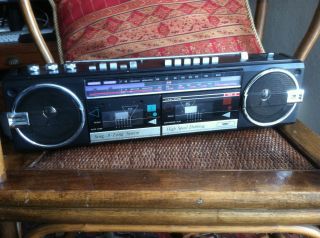
By the late 1980s, I had a walkman and a boombox (more box than boom). This meant cassette tapes.  I could have taped my albums, but I didn't have great equipment for that, so I started buying music on tape.

So, boxes of albums were joined by boxes of cassettes.  I was slow to adopt CDs, but by the time I met Victor (1990) the writing was on the wall. He had a CD player and there seemed no point in fighting the new technology.  Victor and I collected CDs for about 15 years.  In Boston we had a small shelf of them.  In Seattle the CD shelf got longer.  In Columbus, multiple shelves of CDs lined the walls around our stereo.

When we moved to our current home in Chicago, it was 2005.  We contemplated covering the walls with CDs, but instead finally caved and got an iPod (slow to adopt, again--the first iPod was released in 2001). I painstakingly converted all our CDs to MP3s and put our CDs in storage. Hooked up the stereo to our loaded iPod.  Got rid of the records and cassette tapes--we were just not using them.

We talked about updating our stereo system but without conviction.  We just didn't find ourselves using it that much.  The iPod was a bit awkward to use as a stereo controller.  We didn't always find ourselves in the living room when we felt like listening to music.

Then we found Sonos. Wireless stereo. Connects to the Internet with your wireless router. Can play from your iTunes music library and also connect to music services (Pandora, MOG).  You can put speakers in every room; play different music or radio stations in each one or play the same on all.  Control the system with your iOS device or computer or an (admittedly expensive) dedicated remote.

Our music listening increased exponentially.  We had instant, easy access to all our own music and (through MOG) just about any music we could imagine. If we didn't feel like choosing what to play, Pandora was a great DJ. Sonos also led us to Wolfgang's Vault, a trove of live recordings.

These are paid services.  MOG is the most expensive, at $9.95 a month.  Pandora costs about $40 a year, as does Wolfgang's Vault.  But it means that for about $200 a year we can play anything, anytime, anywhere (the subscription fees cover streaming to our mobile devices as well as Sonos). 

A friend asked us recently, Do you still buy music?  Why would you?

We buy a lot less than we used to.  But we do buy music sometimes. Some music is so special you just want to own it.  The pleasure of collecting is only partially satisfied by marking something a "favorite" (essentially bookmarking it) on a subscription service.  Further, you don't always have access to the Internet, and you can't always stream.  We have our entire music libraries on our iPhones now (at 64GB, our phones have more capacity than our first iPod (32GB)); at 20,000 feet (even on a non- "wi-fi" plane) we can listen to our favorite stuff.  If I discover a something great on MOG or Pandora (Ben Folds, or the Follies cast album) I generally buy it eventually.

Old fashioned, I guess. Quality deserves patronage.

03 December 2012

Anna Karenina (the movie)

Victor and I went to see this movie last weekend.  We have both been taking a wonderful class about the book at the Newberry Library.The movie on the whole is continuously beautiful to look at: sets, costumes, framing. But is it entirely successful as an adaptation of the great novel?  I think not.  Anna Karenina is of course a long book--even people who haven't read it know that--with more than a hundred characters, alive with plots and subplots. Too much to include in a film, or even a miniseries, probably. This movie, like most adaptations, chooses to focus on the Anna/adultery theme almost entirely, but it neither tells the original story properly nor makes the story entirely its own (though, by the end, it seems to be trying to).

It would be hard, I think, to tell the original story properly outside of a novel today because it relies on a concept of female honor that we don't really have anymore. Anna has a passionate affair with Count Vronsky and can't reconcile her love with the betrayal of her marriage vows. Even within the novel, Anna is almost unique in how her conscience makes her suffer (perhaps Levin has as sharp a conscience, but he is without great sins, so his suffering is accordingly less tormenting). Ultimately, this conflict--not real or fancied infidelity on the part of her lover Vronsky, or the loss of custody of her beloved son Seryozha, or even social condemnation--drives her to suicide. 

In the novel, Tolstoy establishes the conflict by describing Vronsky after he has made Anna his mistress: he "felt what a murderer must feel when he looks at the body he has deprived of life." (In the film, Anna, in the midst of their first lovemaking, calls Vronsky a murderer repeatedly--it becomes an endearment.It's an interesting transposition, but to a viewer unfamiliar with the book it must seem merely perverse.) Anna's shame is the principal subject of the short chapter describing Vronsky's conquest. Her shame drives all of her subsequent behavior; how can a 21st century movie portray this? (The only example I can think of is Kenneth Lonergan's excellent Margaret, starring Anna Pacquin, but the context of the shame is quite different.)

Instead, Joe Wright's movie (using Tom Stoppard's script) tells a relatively simple and conventional romantic story. Two people meet and are consumed by their passionate attraction. On one side, a marriage is destroyed; on the other, a career. Society scorns the woman who defies convention, and the woman, plagued by insecurities, is driven to suicide. So much is left out that when scenes from the novel do appear in the film, they don't have the same meaning. Fully half of Anna Karenina, the novel, is devoted to Levin's soul searching. In the movie, Levin's few scenes mainly involve his romance with Kitty. When a peasant enlightens him about the right way to live, it can hardly resonate with the audience; nothing in the film so far has led us to this point. It is hard to imagine anyone who hasn't read the book understanding the movie at all. It moves at lightning speed until the last half hour or so, quickly transitioning from scene to scene.

The transitions themselves are unusual, because the action of this film largely takes place in a theater that varies in size from enormous, to really enormous, to as-big-as-the-whole-outdoors. The camera follows characters backstage as a scene ends; before you know it, another scene begins among the curtain machinery. This conceit makes you acutely aware you are watching the retelling of a very familiar story and is cleverly and quite beautifully achieved. Even the "outdoor" scenes are framed in such a way that you feel you haven't really left the theater. You can relate this to the themes of Anna Karenina on at least a simplistic level: the main characters of the novel, Anna and Levin, continually strive to escape or pierce social constraints. They fail, Anna unhappily and Levin happily: society's eye is constantly upon them.

Casting notes: In general, everyone seems too young. But this is Hollywood. Keira Knightley (Anna) looks great as a brunette.  Her Anna has its moments but in general Knightley is better at portraying charm and joy than suffering. Jude Law, a fine actor, inhabits Karenin with almost too much humanity--we should not like Karenin so much, but Law gives us nothing to bristle against. Aaron Taylor-Johnson (Vronsky) is adequate in a not terribly interesting role. A handsome cipher. Levin is played by Domhnall Gleeson, also adequate, and also not in an interesting role. Alicia Viskander (Kitty) is called on to be little more than charming, and manages that very well. While Matthew MacFadyen is a terrific Oblonsky (I never noticed his resemblance to Kevin Kline before), he is not given a great deal to do in this movie. Kelly Macdonald is excellent as Dolly; in fact, the whole opening of the movie, a series of stylized set-pieces conveying the Oblonsky household first harmonious and then in complete disarray, is quite splendid. Ruth Wilson is just right as Princess Betsy: knowing and poisonous.

This movie offers many pleasures for an audience familiar with the novel.  The staging of the ball scene, in which Anna first dances with Vronsky, while untrue to the book in several ways, is quite compelling. Also different from the book but nicely done is the scene in which Levin proposes to Kitty for the second time. In the movie, Levin and Kitty use alphabet blocks to communicate instead of a slate with chalk--excellent choice. And did I mention the costumes are gorgeous? For a literary movie, Anna Karenina is a visual feast.

The movie ends with Anna and Karenin's son Seryozha playing outdoors with Anna and Vronsky's daughter Anya while Karenin looks benignly on.  The scene has nothing to do with the book but offers an intriguing glimpse of a movie that might have been made--inspired by the novel but not bound by it.  What we have instead is a movie that takes a few leaps in that direction but mainly sticks to an impoverished subset of the text.

20 November 2012

Comparison Shopping: Extended Warranty Programs

I used the American Express extended warranty program for the first time when our milk frother (how yuppie are we?) stopped working a couple months after its warranty expired. I called the service number, provided the name of the product, described the problem, gave the date of purchase, cost, length of original warranty, the total amount on the receipt, and within 48 hours the purchase price had been refunded to our account.

Couldn't have been simpler.  Previously I'd been a credit card agnostic, but this experience made me an AMEX convert.  My husband and I resolved to use our AMEX card for most of our purchases--especially for stuff that might break--and we bragged about AMEX's great customer service to anybody who would listen (we had a similarly good experience with AMEX's auto CDW coverage a few months later).

Recently my iPhone's battery case (a Mophie Juicepack Air) stopped working properly.  I checked to see when it had been purchased and found the warranty expired in September.  So I called American Express and gave them the required information: product name, problem, purchase date, warranty length, purchase price, total amount on receipt....  DARN!  While I was on the phone with the representative I saw that the purchase had been made with our Visa card, not our AMEX.  So I apologized to the rep and hung up.

Then called Visa.  Which offers a similar program.  But not the same.  Because after providing Visa's representative with similar information to that which I'd provided AMEX, she emailed me a FORM (from the sender "Enhancement Services"--do they WANT you to delete their email as spam?). In addition to signing the form, I have to provide the original receipt, the Visa statement containing that charge, and a receipt for the replacement product.

The form and accompanying documentation can be faxed or mailed.

So I have a couple of issues with this.  First, I was able to execute a claim solely on the phone with AMEX; why does Visa require a form?  Second, why does Visa need me to give them a receipt and a statement--this "proof of purchase" requirement would take a person in their office a moment (querying with our account number and the purchase date that I provided). Instead I have to hunt around and print things; presumably this would be even more trouble for less organized people. Visa recommends that you avoid this trouble by registering everything you buy with its Warranty Manager service, but that seems unnecessarily onerous.  Again, since you bought the product with your Visa card, Visa HAS this information already.  And then, why on earth don't they let you submit the documentation electronically?

Conclusion: even when credit cards seem to provide the same service, they really don't. Which you probably already knew, but I didn't (I suspected it).  The documentation will be mailed to Visa today; I'll update this post when it's been resolved one way or another.

Update (12 August 2015): Well, I guess I forgot to update. We did get compensated by Visa, about a month later, by check.  All in all, a much clunkier process.

To Insure or not to Insure (in Mexico)?

We were recently in Cabo San Lucas for Victor's stepbrother's wedding. We rented a car because rates were so cheap, but after we arrived we were obliged to pay for liability insurance that doubled the cost of our rental.  We are returning to Mexico for our winter vacation, so I set out to discover whether we really should have paid for that liability insurance or if we were already covered.

Short answer: we were smart to pay.  Long answer: the collision damage waiver (CDW) coverage offered by many credit cards is not the same as liability insurance.  But even if you knew that (we did), it turns out that liability insurance you already have (bundled with your car insurance or--as in our case--homeowner's insurance) may not be of much help in Mexico.  I called our insurance agent and she confirmed that, Yes, we were covered, but she still advised us to buy the rental company's liability coverage. "They make their own rules over there," she said.  She explained that they tend to go after you in court rather than deal with a U.S. insurance company.

Or something like that.  If you Google the issue, there's quite a bit of chatter, but it comes down to this: buy the Mexican liability insurance.

30 October 2012

Life without Refined Grains

A few months ago, Victor came home from a business trip committed to a higher-protein, lower- carbohydrate diet.  Partly this was because he'd noticed a colleague of his had become significantly trimmer in the past year, and his colleague attributed his long-term weight loss to a higher-protein diet.

We did not want to omit vegetables of any kind, but we have found Michael Pollan's arguments against processed foods and over-consumption of grains persuasive (see In Defense of Food, for example) and so we decided to avoid refined grains, and try not to automatically "replace" with whole-grain versions, but really to change our eating habits (sashimi instead of brown rice maki). We used to eat all the bread in the breadbasket at restaurants--now we ask them not to bring the bread, even if the rolls are "whole-grain."  This means we deny ourselves some of our favorite foods, so once a week we allow an "exception." But practically speaking, we avoid bread, pasta, and rice.

It's a challenge, especially on-the-go, since sandwiches are out.  Nuts and fruit are a frequent fallback.  This morning I was at a big meeting, catered with "continental breakfast" that was mainly pastries and fruit.  So I ate the fruit. At mid-morning the food table was refreshed with cookies and--happily--granola bars. Oats--rarely if ever refined--are permitted. 

While we have been limiting refined grains, we have been increasing protein, in the form of animal products (eggs, milk, cheese) as well as meat, at the same time trying to maintain or increase the amount of vegetables that we consume. We eat saucy Asian dishes (stir-fries or curries) without accompaniment or over simple vegetables like steamed cabbage.

And we learn new things.  Today's lesson: buckwheat is not a grain.  Grain is only associated with cereals, which are grasses.  Grain is "botanically, a type of fruit" composed of endosperm, germ, and bran. Buckwheat, on the other hand, is the seed of a broadleaf plant related to rhubarb. It's called a pseudocereal because it's used as a cereal grain  but the name is as close as it gets to being grain. 

Why does it matter? It means we can eat buckwheat crepes!  And soba noodles! Yay!

What everyone wants to know is if we've lost weight.  Only a tiny bit.  But we seem to have at least halted the upward-sloping trajectory. And we've eliminated much of the "filler" from our diet--the useless stuff--which feels good.

08 October 2012

Woyczek on the Highveld by Handspring Puppet Company and artist William Kentridge

While I'm not a fan of Georg Buchner's unfinished Woyczek, I was anxious to see this production a couple of Sundays ago at MCA Chicago when I learned that the South African artist William Kentridge was associated with it. I first encountered Kentridge's work at an MCA Chicago exhibit in 2008-2009, and was enthralled by it.

This production was a remounting of a show that Kentridge first directed in 1992. The artist's dreamlike animations are the backdrop for the Handspring Puppet Company's remarkable constructions. The story, about a poor German soldier oppressed by the military and medical establishments to the extent that he loses his sanity and murders his common-law wife, is transformed in this South African retelling. Woyczek is now a black migrant worker.

Buchner's play doesn't need to be changed much to make Woyczek at home in South Africa.  Handspring's puppets and Kentridge's drawing make the story's new location seem so fitting that it's hard to imagine the play taking place anywhere else.  The performers carrying and speaking for the puppets are astonishingly good--their movements complement the puppets beautifully.  And Kentridge's animations are utterly haunting.

While I'm still not a big fan of Woyczek, Woyczek on the Highveld convinced me that Buchner set his play in the wrong country. And I'm grateful to have had the opportunity to see this production.

Note: While this show has come and gone at the MCA, you can find snippets of Woyczek on the Highveld on Youtube.

The Iron Stag King at the House Theatre of Chicago

Victor and I went to see this show a couple of Saturdays ago and thoroughly enjoyed ourselves.  To us it felt like a return to what we like most about The House Theatre: inventive staging of plays that are unapologetically couched in genres that you don't usually find in the theater. Specifically, science fiction/fantasy plays.  The Iron Stag King is straight fantasy: a hero's journey in a re-imagined universe, envisioned as the first part of a trilogy.

While the story is solid, it is not strikingly original. It would be pretty straightforward to trace aspects of the tale to other hero's journey stories we all know.  What's particularly striking about this production are the beautiful visuals--puppets, costumes, and props--and the conviction the strong cast invests in their multiple roles.

We're eagerly looking forward to the subsequent installments of this new trilogy.